What are the precautions for valve plate spraying
Information summary:Valve plate spraying is a job that requires correct operation. Here are some precautions:
1、 In terms of preliminary preparation
1. Surface treatment
Cleaning: The surface of the valve plate must be cleaned to remove impurities such as oil stains, rust, and old paint layers. Specialized cleaning agents, such as metal oil stain cleaners, can be used to clean by soaking, wiping, or rinsing.
Valve plate spraying is a job that requires correct operation. Here are some precautions:
1、 In terms of preliminary preparation
1. Surface treatment
Cleaning: The surface of the valve plate must be cleaned to remove impurities such as oil stains, rust, and old paint layers. Specialized cleaning agents, such as metal oil stain cleaners, can be used to clean by soaking, wiping, or rinsing. For stubborn oil stains, multiple cleaning may be necessary to ensure a clean surface. Rust can be polished with sandpaper or treated with rust remover. For example, if there is grease on the surface of the valve plate, it will affect the adhesion of the coating and cause it to peel off during use.
Roughness adjustment: Increasing the surface roughness of the valve plate appropriately can help improve the adhesion of the coating. It can be achieved through processes such as sandblasting and shot blasting. However, the roughness should be controlled within a reasonable range. Generally speaking, a surface roughness (Ra) between 3.2-12.5 μ m is more suitable. If the roughness is relatively large, it may lead to uneven coating thickness and defects such as pinholes; If the roughness is too small, the coating adhesion is insufficient.
2. Material selection
Coating type: Choose the appropriate coating according to the usage environment and requirements of the valve plate. If the valve plate is used in high-temperature environments, such as in high-temperature pipeline systems in refineries, it is necessary to choose high-temperature resistant coatings, such as silicone high-temperature resistant paint; If used in corrosive environments such as acidic and alkaline environments in chemical production, anti-corrosion coatings such as epoxy anti-corrosion paint should be used. The performance and construction requirements of different coatings vary greatly, and it is necessary to ensure that the performance of the coatings can meet the working conditions of the valve plate.
Supporting system: Some coatings require the use of primer, intermediate coat, and topcoat. For example, valve plates used in marine environments may need to be coated with epoxy zinc rich primer first, which can provide good rust prevention and adhesion, followed by intermediate paint to enhance anti-corrosion performance, and then topcoat to improve weather resistance and aesthetics. To ensure compatibility between coatings and avoid chemical reactions that may cause coating failure.
3. Environmental control
Temperature and humidity: The temperature and humidity of the spraying environment have a significant impact on the quality of the coating. Generally speaking, the construction temperature of most coatings is between 5-35 ℃. If the temperature is too low, the drying speed of the coating will slow down, and it may even fail to dry; If the temperature is too high, the solvent in the coating evaporates too quickly, which can easily lead to defects such as orange peel and pinholes. The humidity is usually required to be below 85%. High humidity environments may cause the coating to turn white and bubble, as moisture may mix into the coating.
Ventilation conditions: Good ventilation is necessary because coatings contain volatile organic compounds (VOCs). Ventilation can cause solvents to evaporate and reduce the concentration of solvents in the air, which is beneficial for the health of construction workers and also helps with the drying of coatings. Ventilation equipment such as exhaust fans, ventilation ducts, etc. can be used to ensure sufficient fresh air circulation in the spraying area.
2、 In terms of spraying process
1. Spraying equipment
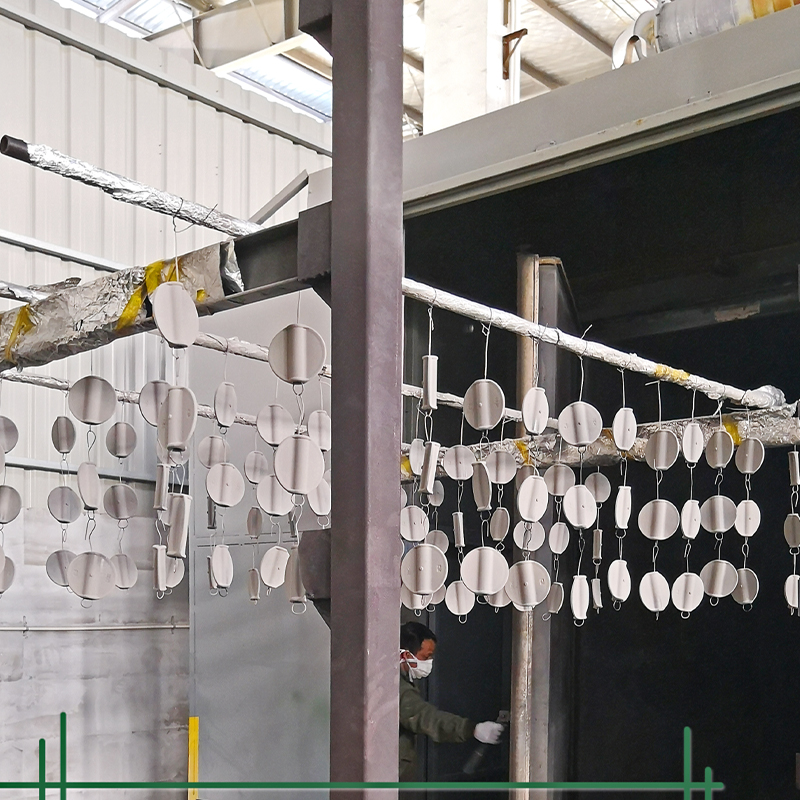
Spray gun selection and debugging: Choose the appropriate spray gun based on the type and viscosity of the coating. For example, for water-based coatings with low viscosity, smaller caliber spray guns can be used; For paints with high viscosity, larger caliber spray guns are required. Before spraying, adjust the spray shape, spray width and paint spraying amount of the spray gun. The shape of spray can be round or oval, which can be realized by adjusting the nozzle of the spray gun; The spray width can be adjusted according to the size of the valve plate and the area to be sprayed; The amount of paint sprayed should be determined based on the viscosity and spraying speed of the paint to ensure uniform coating thickness.
Equipment maintenance: Regularly clean and maintain the spraying equipment. After each use, the spray gun should be cleaned to prevent the paint from drying up and blocking the nozzle. For the feeding system, such as paint tanks and pipelines, regular inspections and cleaning should also be carried out to ensure smooth supply of paint. If the equipment malfunctions, such as unstable air pressure in the spray gun, it can lead to uneven coating thickness and decreased quality.
2. Spraying operation
Spray distance and angle: The distance between the spray gun and the valve plate surface is generally maintained between 15-30cm. If the distance is too close, the paint is prone to accumulate and produce sagging phenomenon; If the distance is too far, the atomization effect of the coating will be poor, which will result in uneven and granular coating. The spraying angle should be as perpendicular as possible to the surface of the valve plate, so as to ensure that the coating is evenly covered on the valve plate. If the angle is tilted, it may result in inconsistent coating thickness and sudden thickness changes at the edges.
Spray sequence and overlap rate: Spray is usually carried out in a certain order, such as starting from one end of the valve plate, moving the spray gun at a uniform speed, and spraying line by line. The overlap rate between adjacent rows is generally controlled at around 50% -60% to ensure the integrity and uniformity of the coating. If the overlap rate is too low, there may be areas of missed spraying; If the overlap rate is too high, it will cause the coating to be too thick and prone to problems such as sagging.
Coating thickness control: The thickness of the coating should be strictly controlled to avoid being too thick or too thin. Thick coatings are prone to defects such as sagging and cracking, while thin coatings may not achieve the expected protective or decorative effect. A wet film thickness gauge can be used to detect during the spraying process, adjusting the number of spraying passes and the thickness of each pass based on the solid content of the coating and the required dry film thickness. For example, if the solid content of a certain coating is 50% and the dry film thickness is required to be 100 μ m, then the wet film thickness needs to reach about 200 μ m (considering solvent evaporation), which can be achieved through multiple spraying to meet this thickness requirement.
3、 In terms of post-processing
1. Drying and curing
Drying time and temperature control: Different coatings have different drying and curing requirements. Some coatings can be naturally dried at room temperature, while others require baking at a certain temperature to fully cure. For example, powder coatings typically require baking at a temperature of 180-200 ℃ for 10-20 minutes. Strictly control the drying and curing time and temperature according to the instructions of the coating to ensure that the coating is fully dried and cured. If the drying and curing are not complete, the hardness, adhesion and other properties of the coating will be affected, and it is easy to be damaged during use.
Prevent dust pollution: During the drying and curing process of the coating, it is necessary to prevent dust and other impurities from falling on the coating. Dust prevention facilities can be installed in the dry area, such as covering with plastic film or drying in a closed paint booth. If dust falls on the coating, it will affect the appearance and quality of the coating, and it needs to be polished and repaired.
2. Quality inspection
Appearance inspection: Check whether the appearance of the coating is flat and smooth, and whether there are defects such as sagging, orange peel, pinholes, bubbles, etc. It can be inspected by naked eye observation or using a low-power magnifying glass. For valve plates with high decorative requirements, appearance quality is more important; For functional coatings, appearance defects may also affect the protective performance of the coating.
Adhesion inspection: Check the adhesion of the coating through methods such as scratch test and tape peeling test. The grid test is to draw a certain size of grid on the coating, then stick it with tape and tear it off to observe the peeling of the coating inside the grid; The tape peeling test involves directly sticking the tape onto the coating, then tearing it off to check if the coating has been adhered by the tape. Good adhesion is the key to the effectiveness of the coating. If the adhesion is insufficient, the coating is prone to detachment during use and lose its protective function.
Thickness inspection: Use a dry film thickness gauge to check if the thickness of the coating meets the requirements. Multiple measurements should be taken at different positions on the valve plate during measurement to ensure uniform coating thickness. If the thickness does not meet the requirements, the reasons should be analyzed, such as improper spraying operations or problems with the solid content of the coating itself, and corresponding measures should be taken to correct them.

 Service hotline:
 Wechat number:wechat number



 National Service Hotline

 Service hotline:0512-69211270
 Company address:1188 CUIZHOU Road, Lili Town, Wujiang District, Suzhou
 contacts:Deng Guangcai 13912602396
 contacts:Long Yanqiao 15995489385


 CN
CN EN
EN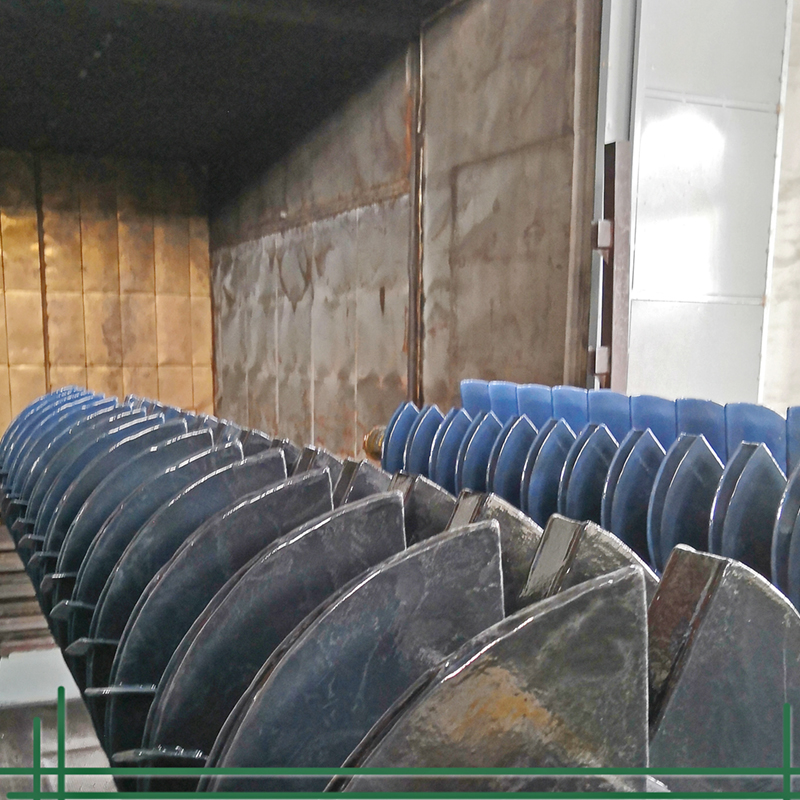

 Add wechat
 Contact us
 Telephone consultation